ALLISON INQUIRY
Listening to Canadians is Not a Partisan Issue
Listening to Canadians sharing their personal experiences of injuries from the COVID-19 vaccines,
whether to themselves or to others, is not a partisan issue.
Members of Parliament and Senators from all political parties are invited to participate and hear Canadians describe their experiences.
MP Dean Allison’s office and the Covid Testimony Association are sending formal requests to all Members of Parliament and Senators, inviting them to attend the Allison Inquiry on September 8, 9, 10, and 11, 2026.
We are now asking Canadians to contact their Members of Parliament and urge them to take part in the Allison Inquiry. MPs need to understand that their constituents expect representation as the Inquiry listens to those who were injured by the COVID-19 vaccine.
Our representatives also need to know that they have permission to listen, that it is their duty to do so, and that many people in their ridings have suffered these injuries.
If you or a family member have been injured after receiving a COVID-19 vaccination, we strongly urge you to encourage your MP to attend in person on one or more days of the inquiry, which is taking place on September 8, 9, 10, and 11, 2026.
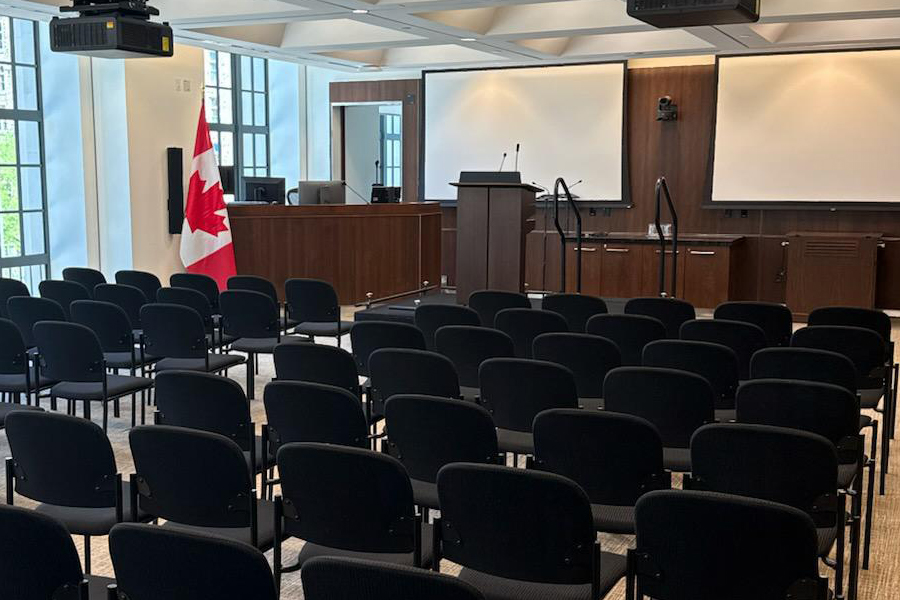
Read below for simple and effective ways of communicating your message to your Member of Parliament.
The More Personal, The Better
The more personal the communication with your Member of Parliament, the more effect it has!
We urge you to complete all methods outlined below to further the chances of your message getting through.
1. In Person
This is the most effective communication. Insist on meeting with your MP and prepare for the meeting. Have follow up meetings.
2. Telephone
This is the second most effective. Even if meeting in person, have follow up calls. Have calls on different subjects and the MPs actions. Telephone calls with staff members are also effective. Speak to them about the issues as if they were the MP.
3. Personal Letter
A handwritten letter is the third most effective communication. If it is not handwritten as long as it is clearly a personal letter and signed, it is almost as effective. And there is no limit on the numbers of letters you write. If 1000 people commit to a letter a week, that is 1000 letters a week.
4. Pre-Written Letters
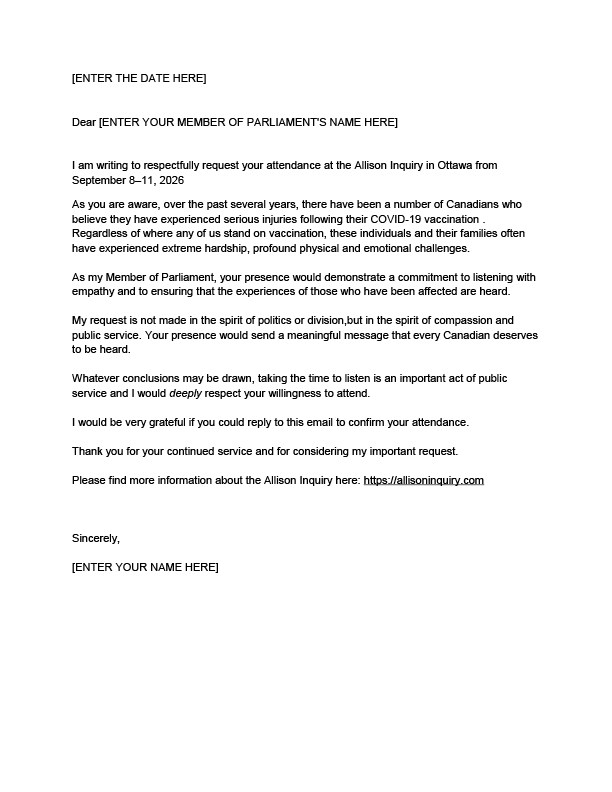
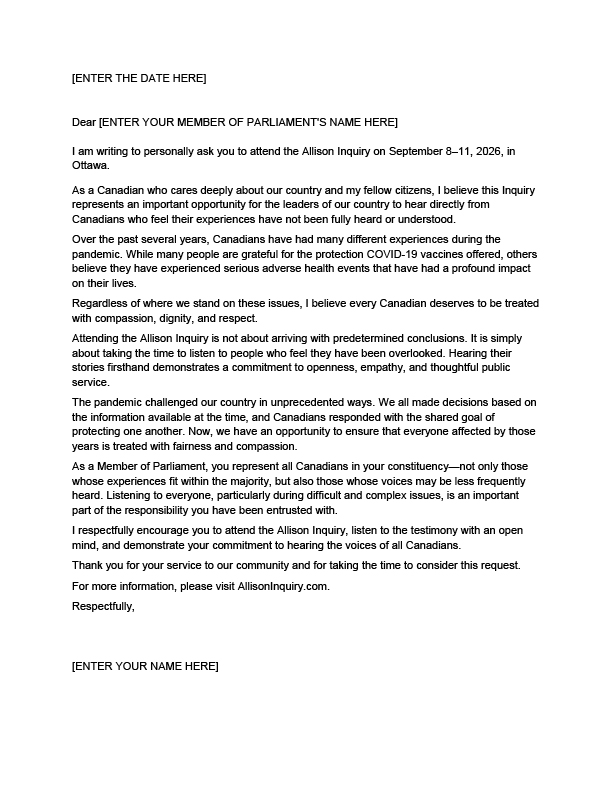
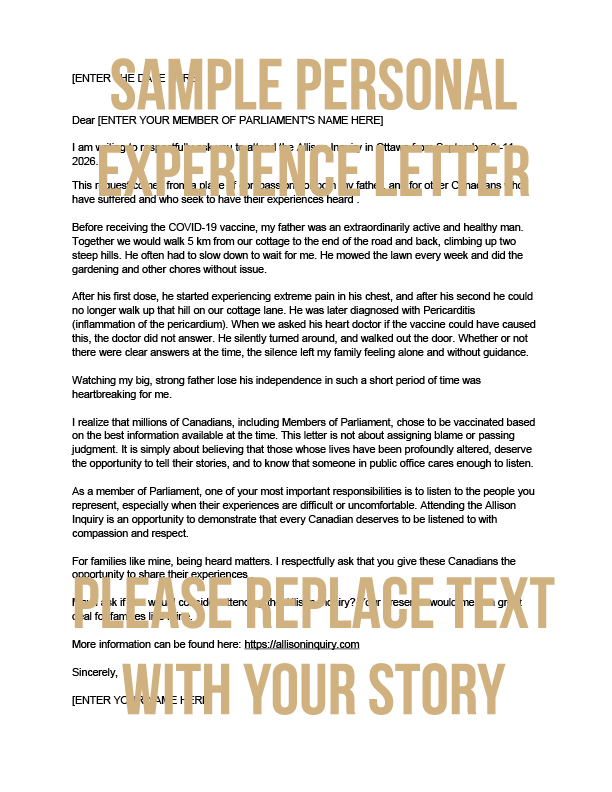
Pre-written letters, that you have added to are good. They support sharing the information that you want to convey well. Pre-written letters, like ones available for download below, if added to by you, have a lesser effect than personal letters.
Writing and Sending Your Letter
Mail Your Letter
Mail your letters to two locations:
1) Your MP at their Hill Office
House of Commons Parliament Buildings Ottawa, Ontario K1A 0A6
* Mail may be sent postage-free to any member of Parliament
2) Your MP at their Constituency Office
Look for your MP at this link > House of Commons Current Members of Parliament
Under their CONTACT tab, you’ll find their address in your riding
* Regular postage stamp required to their constituency office
Do this for each letter and you get two letters to them in a physical form.
Fax Your Letter
Do MPs still have faxes? We think they do! When you are on your MPs page write down their fax number, and get your letter to them in yet another physical form.
Email Your Letter
This has a slightly lesser effect because it is the easiest and takes little effort—but it’s still a valuable way to reach your MP. When emailing, don’t attach your letter. Send your letter in the body of your email.